Why Physical AI is the Future

Imagine a robot that can sort your recycling bin correctly, respond to your voice commands, navigate around obstacles, and learn from its mistakes. This isn't science fiction. It's Physical AI, and it's reshaping industries from manufacturing to healthcare while creating entirely new career paths.
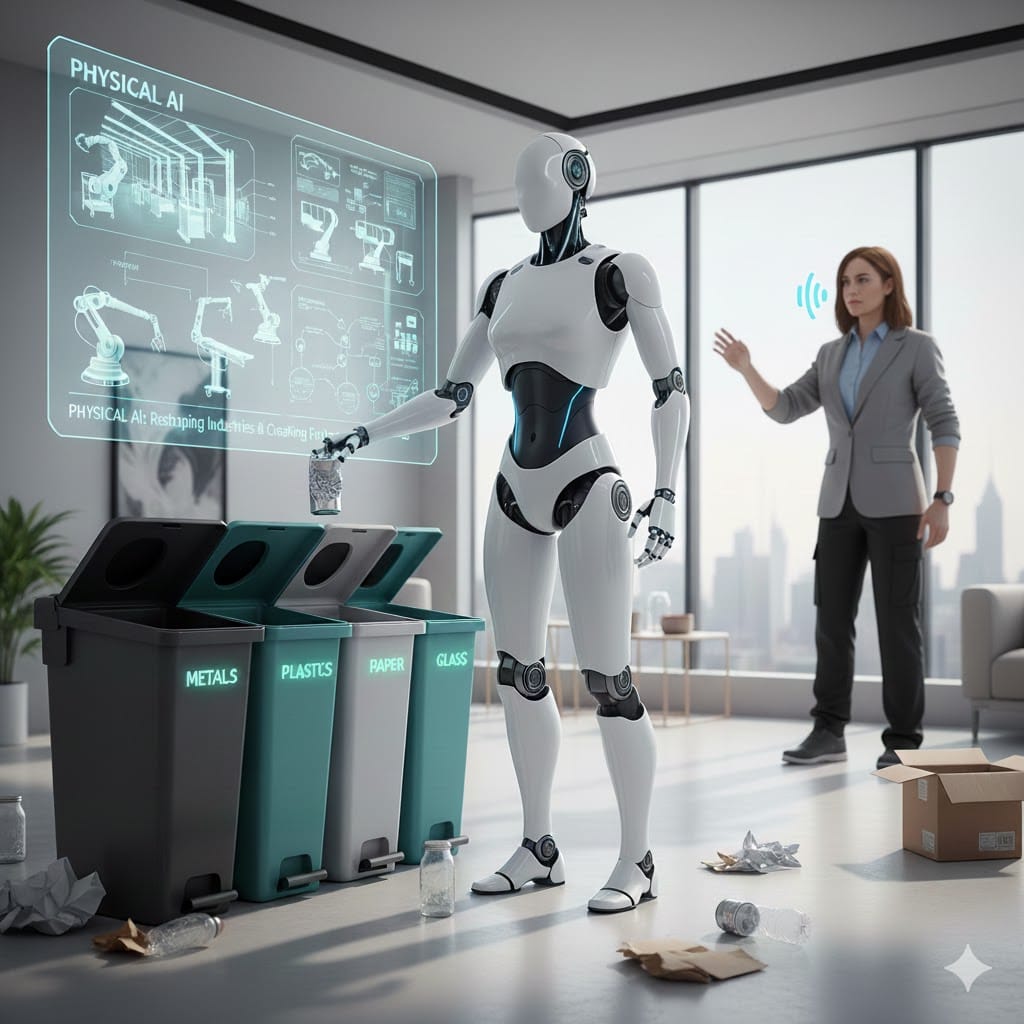
Jensen Huang, NVIDIA's CEO, believes that physical AI (tools that use real-time data from sensors like cameras to complete complex tasks) will become a vital future workforce skill, as essential as coding is today. Yet most computer science education still focuses on software and theory, leaving students unprepared for this physical-digital convergence.
That's why we designed Cobi's Raspberry Pi + AI Curriculum the way we did.
What Exactly is Physical AI?
Physical AI is AI that doesn't just think, it acts in the real world.
Physical AI uses vision-language-action models that guide a robot's decisions and movements. These systems combine neural graphics, physics-based simulation, reinforcement learning, and AI reasoning to understand and navigate the physical world.
Real-world examples include warehouse robots picking orders, agricultural robots harvesting fruit, autonomous vehicles, hospital assistants, and adaptive manufacturing robots.
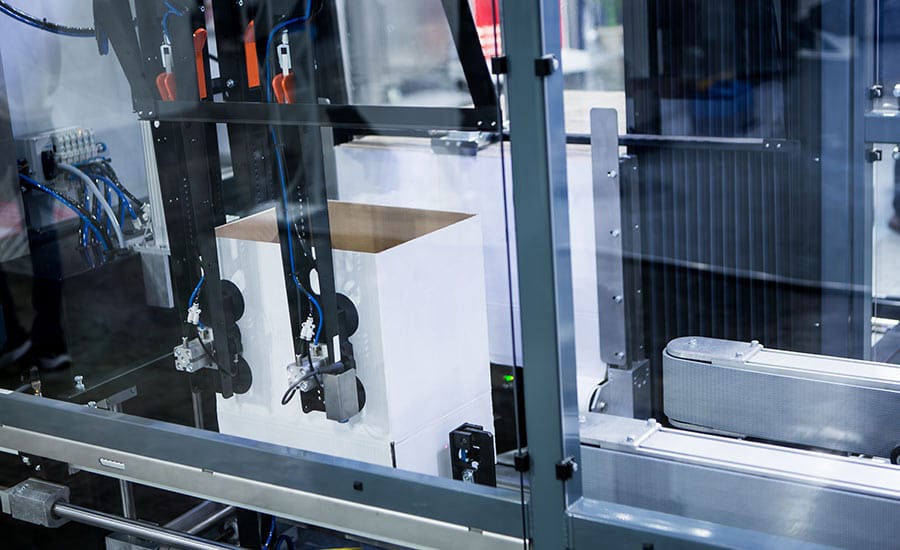
Why Physical AI Matters Right Now
The demand for professionals who combine domain expertise with AI literacy is exploding. Companies need AI system architects, ethics specialists, human-AI collaboration designers, and physical AI specialists in robotics and autonomous mobility.
What's driving this? Persistent labor shortages, aging infrastructure, and the push to reshore manufacturing. Traditional automation isn't flexible enough for modern high-mix, low-volume environments. Industries need systems that can sense, adapt, and make decisions without constant reprogramming.
AI is evolving from perception and generative models to agentic and physical AI, where robots and autonomous vehicles must master dynamics through physics-accurate simulations, real-time control, and materials science. Tomorrow's workforce needs to understand not just how to code, but how code interacts with the physical world.
The Education Gap We Need to Bridge
There's a significant gap between what students learn and what the job market needs. Educational researchers emphasize that students need convergent labs co-teaching basic physical sciences, AI, and engineering together.
Traditional computer science curricula teach algorithms, data structures, and software development. But they rarely give students hands-on experience with sensors, motors, cameras, and the messy reality of making AI work in the physical world.
Students can graduate with computer science degrees without ever connecting a sensor to a microcontroller, processing real-time video data, or debugging code that controls physical movement.
Why Raspberry Pi is the Perfect Platform for Physical AI Learning
The Raspberry Pi's processing capabilities, small form factor, and low power requirements make it ideal for smart robotics and embedded projects.
- Real integration: Direct connection to sensors, cameras, motors, and other physical components
- Industry-standard tools: Students use Python, OpenCV, and other professional-grade software
- Active community: Millions of makers, educators, and professionals sharing projects and solutions
- Flexibility: Works for everything from basic projects to advanced robotics
Raspberry Pi forces students to engage with the physical world. You can't just write code and hope it works. You have to understand voltage, current, sensor calibration, motor control, and how software interacts with hardware. You debug in the real world, where things break, sensors give noisy data, and physics matters.
How Cobi's Raspberry Pi + AI Curriculum Bridges the Gap
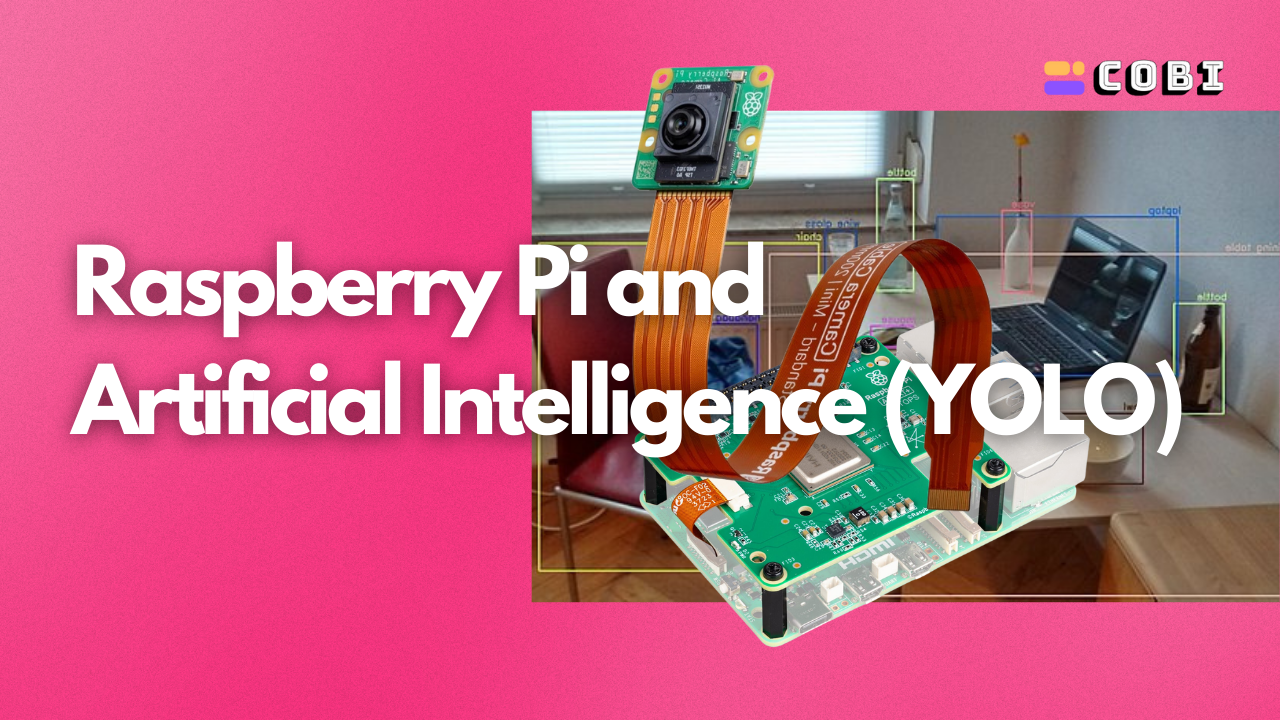
Our five-unit curriculum prepares students for the Physical AI future:
1. Hardware from Day One
Students wire up sensors, read data from them, and use that data to make decisions. They work with cameras, sensors, motors, and LEDs, gaining genuine hands-on experience with Physical AI building blocks.
2. Progressive Complexity
We start with fundamentals (what's a Raspberry Pi, how do sensors work) and progressively add complexity: computer vision, machine learning models, autonomous decision-making, and multi-sensor integration.
3. Real-World Problem Solving
Every project tackles real problems: obstacle avoidance, object identification, sensor integration. Students learn that Physical AI isn't just about algorithms but understanding physical constraints, power management, and real-time processing.
4. Industry-Relevant Tools
Students learn Python (the language of AI), OpenCV (used in professional robotics), and inverse kinematics for robotic movement. These are the actual tools used in industry, not toy versions.
5. Accessible Innovation
A single Raspberry Pi kit costs less than a textbook yet powers projects that teach university-level concepts in an engaging, hands-on way.
The Skills Students Actually Gain
Technical Skills:
- Computer vision with OpenCV
- Sensor integration and real-time data processing
- Physics in code (inverse kinematics, motor control, trajectory planning)
- Machine learning deployment on edge devices
- Python programming for robotics
Problem-Solving Skills:
- Real-world debugging
- Managing trade-offs between accuracy, speed, and power
- Multi-system integration
- Hardware adaptation
Conceptual Understanding:
- How AI perceives the physical world through sensors
- The gap between simulation and reality
- Why physical constraints matter in AI design
- The relationship between software decisions and physical outcomes
These skills directly translate to careers in robotics, autonomous vehicles, smart manufacturing, healthcare technology, and dozens of emerging fields.
Starting the Journey Today
Physical AI represents a fundamental shift in how we think about artificial intelligence. It's no longer enough for AI to just process information; it needs to act in the world, safely and effectively.
You don't need a massive budget or a PhD to start teaching these concepts. With a Raspberry Pi, some sensors, and the right curriculum, students can begin their Physical AI journey today.
Our Raspberry Pi + AI Curriculum makes this accessible for educators and exciting for students. It's hands-on, project-based learning that bridges the gap between computer science theory and the physical-digital future.
The robots are coming, not to replace us but to work alongside us. The question is: will our students be ready to build them, program them, and work with them? With the right education, starting today, the answer is absolutely yes.
Ready to bring Physical AI education to your classroom? Explore our Raspberry Pi + AI Curriculum and discover how you can prepare your students for the careers of tomorrow. [Learn more about our curriculum here]
We also provide an accompanying kit with everything you need to get started. Questions about implementing Physical AI education in your school? Contact us at hello@gocobi.com for more information.